Ep 1: What I Forgot About Forgetting

My mother had a phrase she repeated so often I could recite it before she finished saying it.
"You need to be more present. Pay attention to what you're doing."
She wasn't wrong. But she wasn't entirely right either.
The problem was never that I didn't want to pay attention. The problem was that my attention didn't particularly want to stay in one place.
I have never reliably known what I'm carrying.
Umbrella. Bag. The groceries I just paid for. I can hand over the money, take the receipt, walk out the door, and leave everything I came to buy sitting on the counter.
Not once.
Many times.
Enough times that certain cashiers developed a look they gave me before I reached the exit.
I once left a bag on a bench at a bus stop in Macquarie Center when I still lived in Sydney in 2008. The bag had all the food I bought for the week. I stood up when the bus came. The bag did not.
It wasn't in my line of sight. It wasn't in my hand. As far as my brain was concerned, it had ceased to exist.
My rule now when going out: the bag must be across my body, on my lap, or in contact with my hand at all times. No contact means no memory. That's just how it works.
You might think, well, everyone's a little forgetful.
Not like this.
A forgetful person misplaces things out of convenience or laziness. But if they wanted to be organized, they could be. It wouldn't take much.
For me, building and maintaining a simple organizational system can require more effort than solving a difficult math problem under time pressure.
I know because I've tried.
My wife bought a small bowl for keys. Placed it right next to the front door. The logic was clean, obvious, and required exactly zero thinking.
My brain rejected it immediately.
"Why does it have to go in that bowl? These keys are different from the others. It would make more sense to separate them by category. I'll put them in a different bowl, on the dining table, because I'll definitely see them there before leaving in the morning."
I now have ten key bowls distributed throughout the apartment. I still don't know where my keys are.
At work, there are no bowls to blame.
Forgotten deadlines don't announce themselves. I know about them. I write them down. Then I open another tab, begin something else, and the deadline slides quietly out of my head without any alarm, any warning, any sensation of loss. It simply stops existing.
With coworkers, there is rarely an opportunity to explain this in a way that helps.
I should say something about deadlines specifically.
For people with ADHD, deadlines often don't work the way they're supposed to.
Two things reliably destroy any deadline-based system: procrastination and hyperfocus, which I'll explain properly in the next episode. They've earned their own dedicated eps.
I've tried most of the obvious solutions.
Sticky notes covered every surface until I stopped seeing them.
Notebooks worked until I forgot to open them.
Asking people to remind me felt like outsourcing my problems to people who hadn't agreed to that job.
What actually works, for me, is not willpower. It's infrastructure.
Four tools I use every day:
Fantastical Calendar Application:
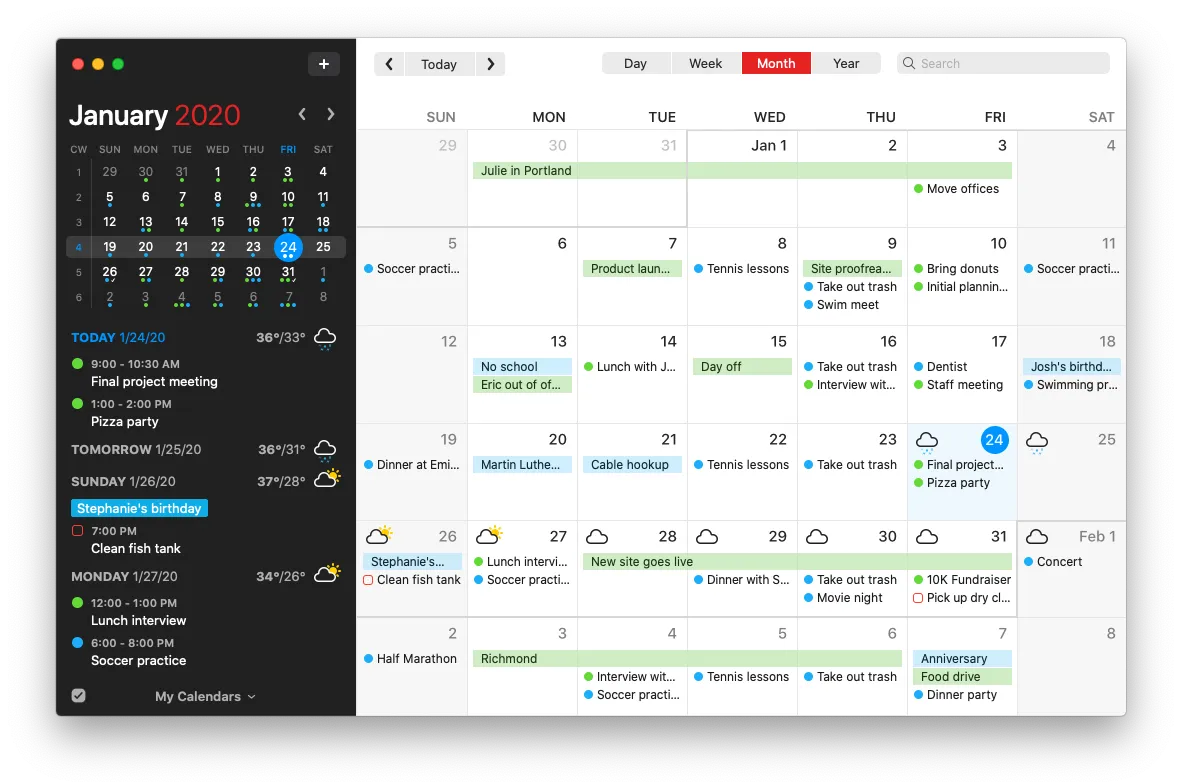
Every task goes into the calendar with a specific time block.
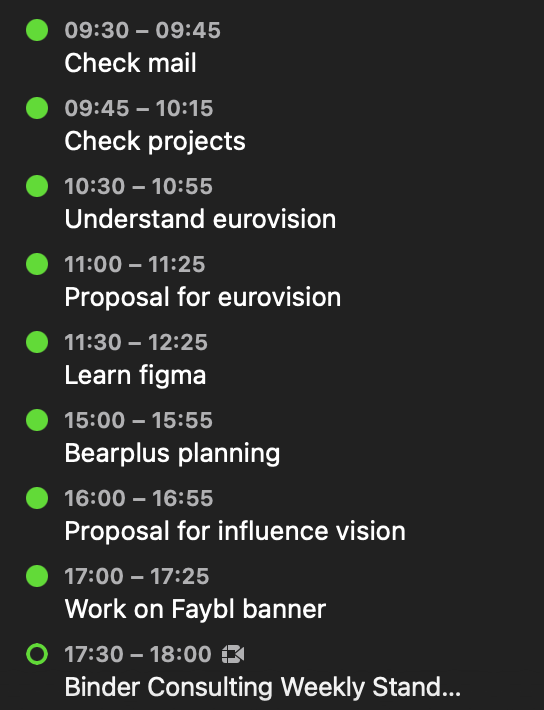
I work in twenty-five minute intervals with five minute breaks, the Pomodoro method.
For an ADHD brain this does two things:
- it prevents hyperfocus from consuming entire afternoons, and
- it creates a small, immediate challenge.
Twenty-five minutes.
That's all. Focus now.
My brain responds better to short constraints than distant deadlines. UNLESS some tasks are under client's tight deadline that they need to be delivered within the day, then you can/should break the rule.
Register an account here.
Here's a real example how I use it for myself:
Endel - Focus, Relax & Sleep
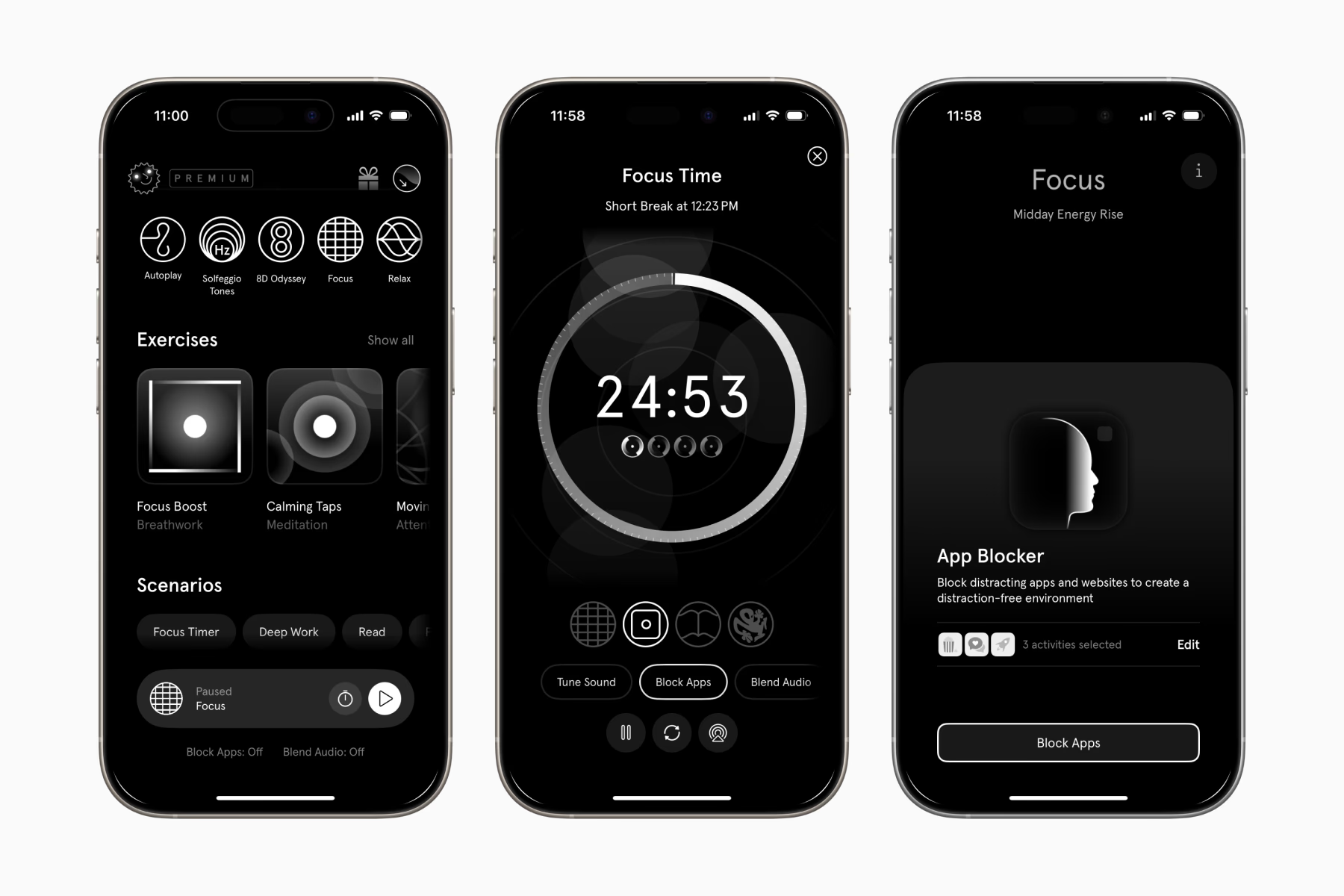
ADHD brains are easily pulled toward whatever sound is nearest.
Endel generates audio designed to sustain focus and mental engagement, and it can be configured to match the Pomodoro cycle exactly.
The music shifts between work intervals and breaks.
I don't need to check the time. My ears already know.
Get a 14-day free trial here.
Desk Minder - One click to create quick desktop reminders & tasks
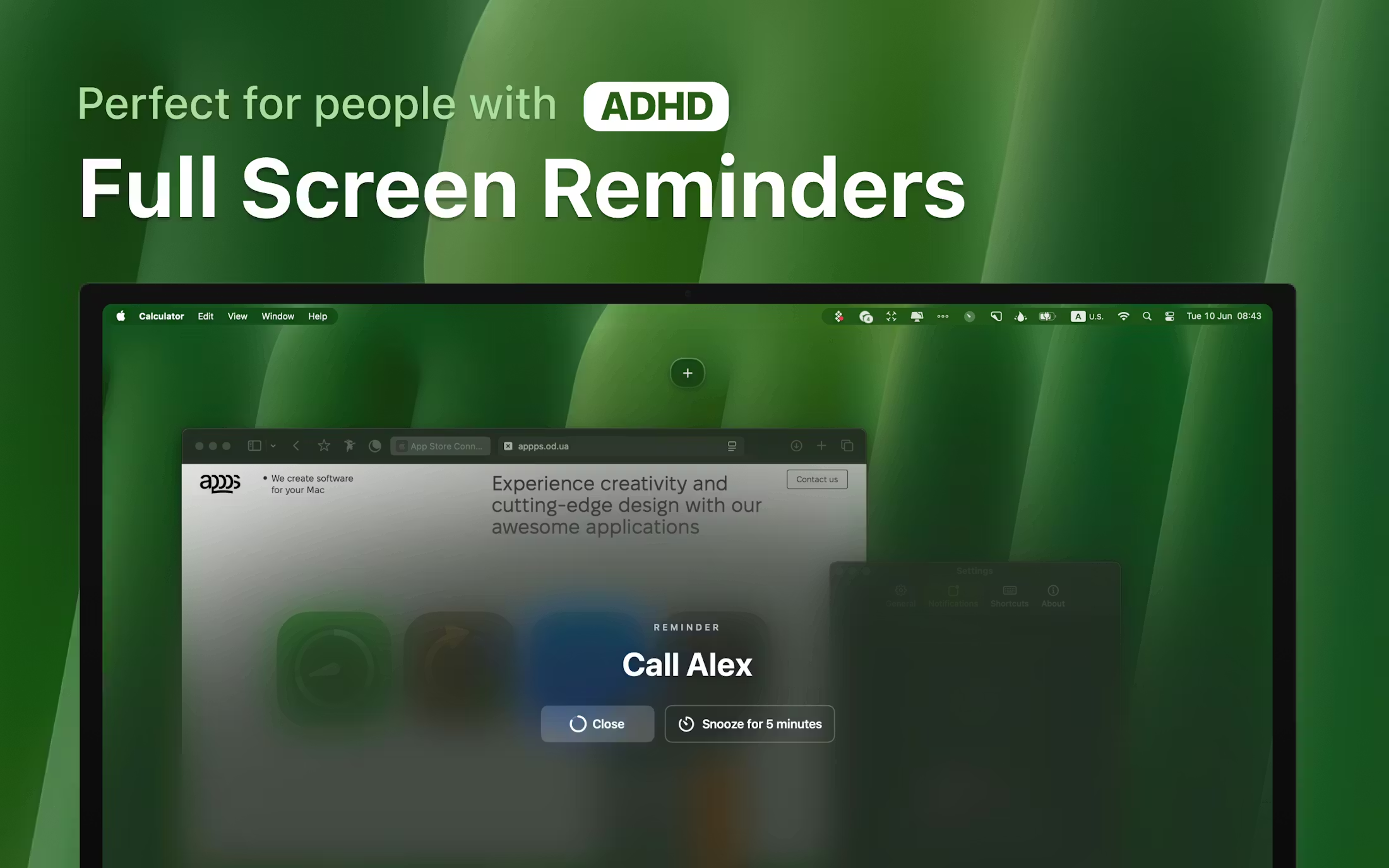
Running a company with ADHD means constant interruption.
Someone always needs something.
The simplest solution is a visible sign: Busy. Back in 15 minutes.
The problem is that after fifteen minutes I have completely forgotten the person exists.
Desk Minder helps manage those interrupted threads so they don't disappear into the part of my memory that things disappear into permanently.
Get the app here.
Mem.ai - Your second brain
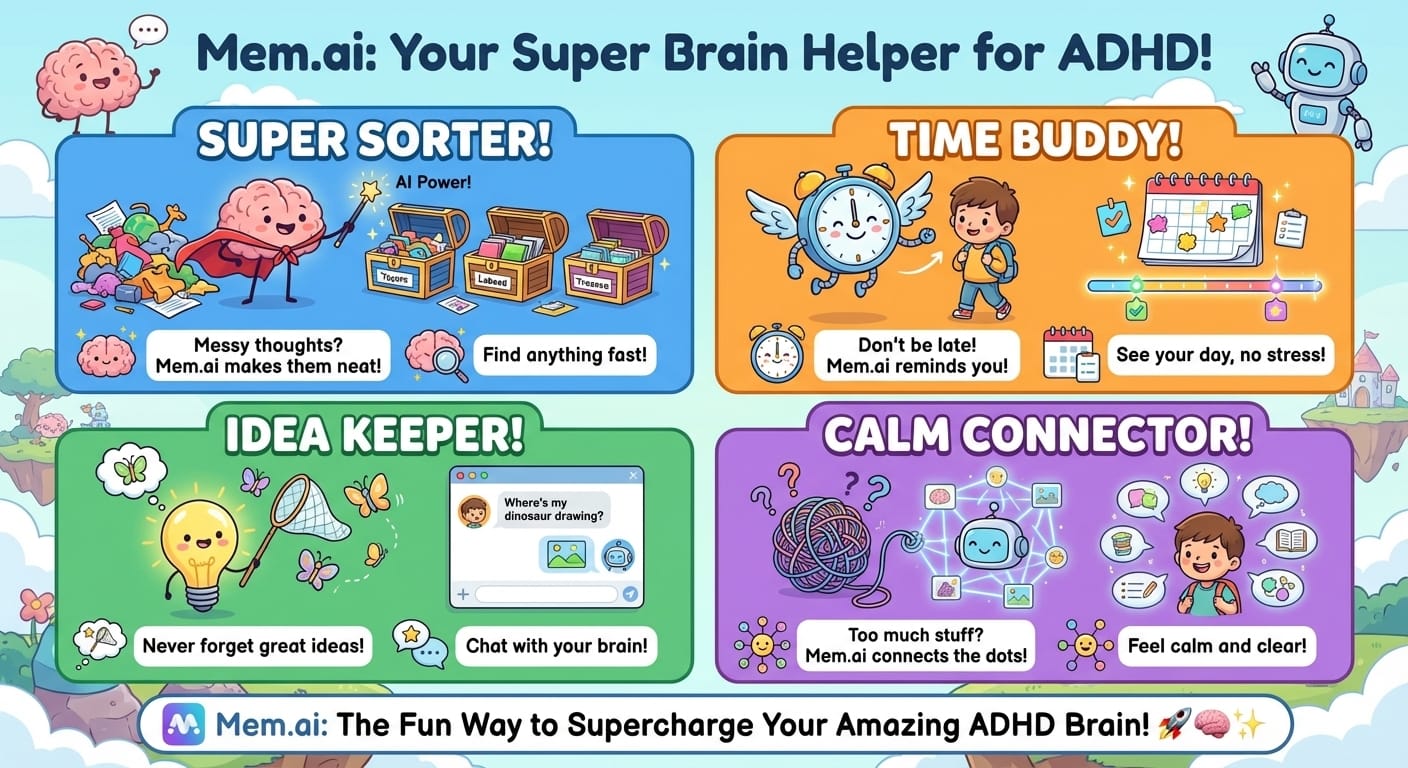
An ADHD brain's memory works like a desk drawer.
Only what's at the front gets noticed. Everything pushed toward the back is effectively gone.
The solution is not to remember more.
It's to stop trying to remember things that don't need to be remembered right now.
I put everything into Mem.ai.
I've trained one habit: when I need something, I ask. It answers like a personal assistant who has never forgotten anything, never taken a day off, and never once sighed at my questions.
Register an account here.
Or use my code BARRETT to enjoy a $20 off any purchase for the first 3 months.
Forgetful child is actually a very creative child - Barrett at Grok
To the parents reading this.
If your child loses things, forgets things, gets called careless or inattentive, please please please:
Please don't assume it's attitude.
Please don't assume it's laziness.
It's possible their brain is simply processing the world in a way that makes certain things genuinely difficult, in ways even they don't fully understand.
"Pay more attention" is not a wrong advice. But for some children, learning how to pay attention requires more than intention.
It requires systems, tools, and someone nearby who is willing to be patient for longer than feels reasonable.
My mother was patient in her way. I'm still learning to be patient in mine.
Everything will be fine.
It just takes a little longer, and requires slightly more key bowls than the average household.
Some links in this post are referral links. But to be straightforward: every app listed here is something I've paid for and used daily long before writing this. I don't recommend things I don't actually use.